Once owners are happy with the balance, the next question is always the same: how much do I actually put in the bowl? Feed too little and your dog loses condition. Feed too much, especially a growing puppy, and you pile on weight that strains their joints. Here is how to get it right.
The starting point: a percentage of bodyweight
Most adult dogs do well on somewhere between 2% and 3% of their bodyweight in food per day.
Work it out like this. Take your dog’s weight in kilograms, and feed that percentage as grams.
- A 20kg adult dog at 2.5% needs 500g of food a day.
- A 30kg adult dog at 2.5% needs 750g a day.
- A 10kg adult dog at 2.5% needs 250g a day.
That 2% to 3% band is your dial. Where you sit on it depends on the individual dog.
Choosing your percentage
Think of the band as a sliding scale:
- Closer to 2% for dogs that need to lose a little weight, are less active, or are prone to gaining.
- Around 2.5% as a sensible middle for a typical adult holding a healthy weight.
- Closer to 3% or above for very active, working, or hard-to-keep-weight-on dogs.
These are starting points, not laws. The real test is your dog, not the calculator.
The most important rule: feed the dog in front of you
Numbers get you into the right ballpark. Your dog’s body tells you whether you have it right.
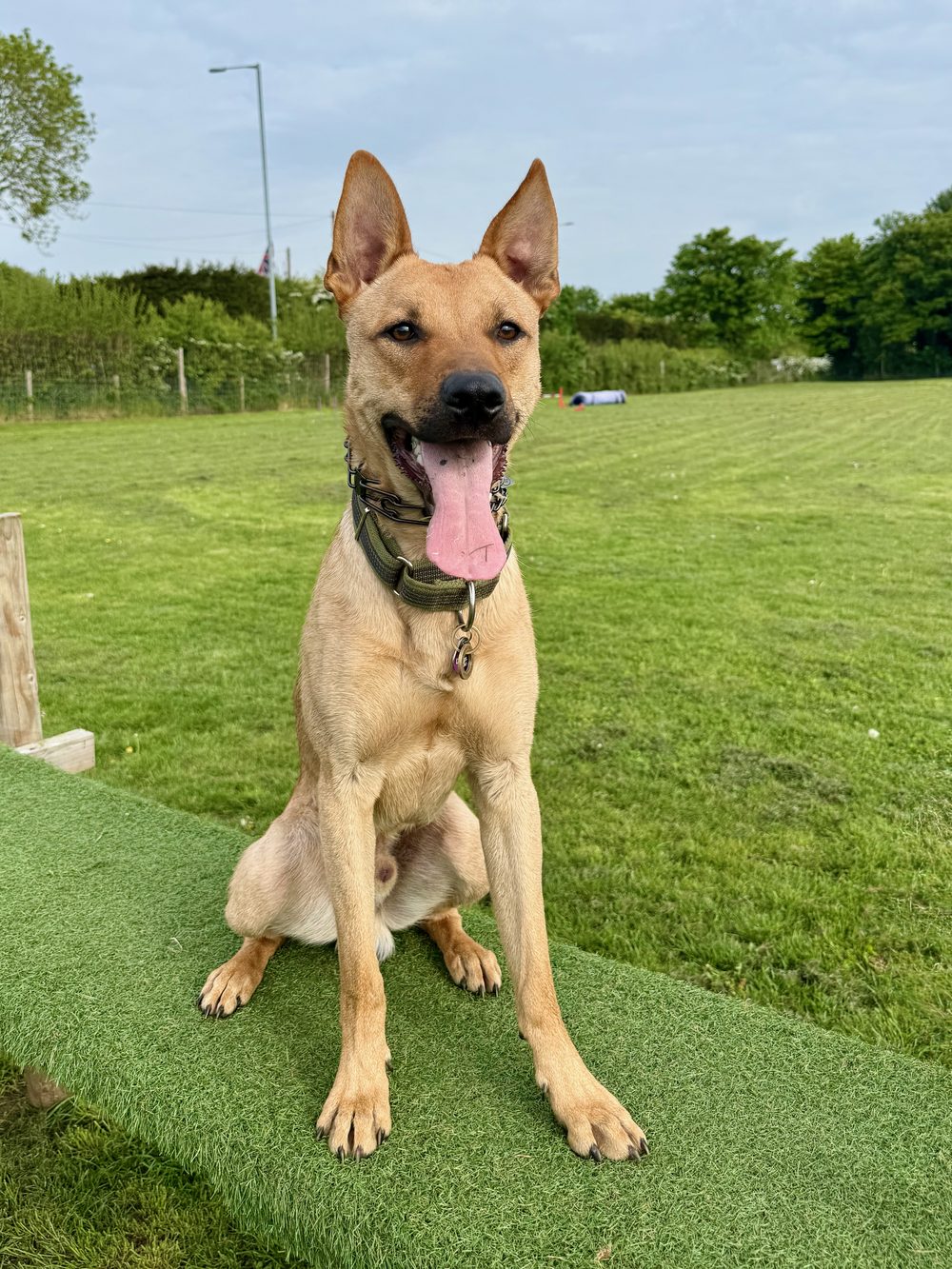
Check their condition every week or so. You should be able to feel their ribs easily under a light covering of flesh, without them being sharply visible. You should see a waist when you look down from above, and a tuck-up when you look from the side. If they are getting porky, ease the portion down. If ribs and spine are becoming obvious, bump it up.
Adjust gradually, in small steps, and give each change a week or two to show before changing again.
Puppies are different, and it matters
Puppies need more food relative to their size because they are growing, but the way you calculate it changes as they grow, and getting this wrong is one of the most common mistakes.
Young puppies are often fed a higher percentage of their current weight. But as they get bigger, feeding a percentage of current weight can push too much food and encourage them to grow too fast. Fast growth is not a good thing. It is linked to joint problems, especially in larger breeds.
The better approach as they grow is to feed against their expected adult weight rather than their current weight, easing them down towards adult maintenance levels as growth slows. This keeps growth lean and steady, which protects developing joints. We cover this properly in the dedicated post on raw feeding puppies.
How many meals a day?
For most adult dogs, two meals a day is a sensible default, splitting the daily total in half.
For large and deep-chested breeds, two meals is not just convenient, it is a safety point. Feeding one big meal a day is linked to a higher risk of bloat in these dogs. If you have a German Shepherd, a Great Dane, a boxer or a similar deep-chested breed, keep to two meals and read our post on bloat. Puppies generally need more frequent meals, three or four a day when young, reducing as they mature.
Active dogs, seasons and life stages
Your dog’s needs are not fixed. A working dog in winter burns far more than the same dog dozing through a quiet summer. Older dogs often need a little less as they slow down. Neutering can lower energy needs too.
None of this requires constant maths. It requires paying attention. Re-weigh every couple of weeks, run the rib check, and nudge the portion to match what you see.
When you would rather not work it out
If the calculating, weighing and adjusting feels like more than you want to take on, that is exactly what a tailored plan is for. You give your dog’s details, and the portions come back worked out, split into the right number of meals, with prompts to re-weigh and adjust as they change.
Next in the series: how to transition your dog to raw without an upset stomach.
This article is general guidance and not a substitute for professional veterinary advice. Always consult your vet before changing your dog’s diet, particularly if your dog is pregnant, unwell, or has a diagnosed health condition.
Put this into practice, for your dog
Get a free starter plan with exact portions and a shopping list built around your own dog.
Free, no obligation. We will never share your details.
Thank you, that's on its way.
We have got your dog's details and will email your free starter plan shortly. Keep an eye on your inbox (and your spam folder, just in case).