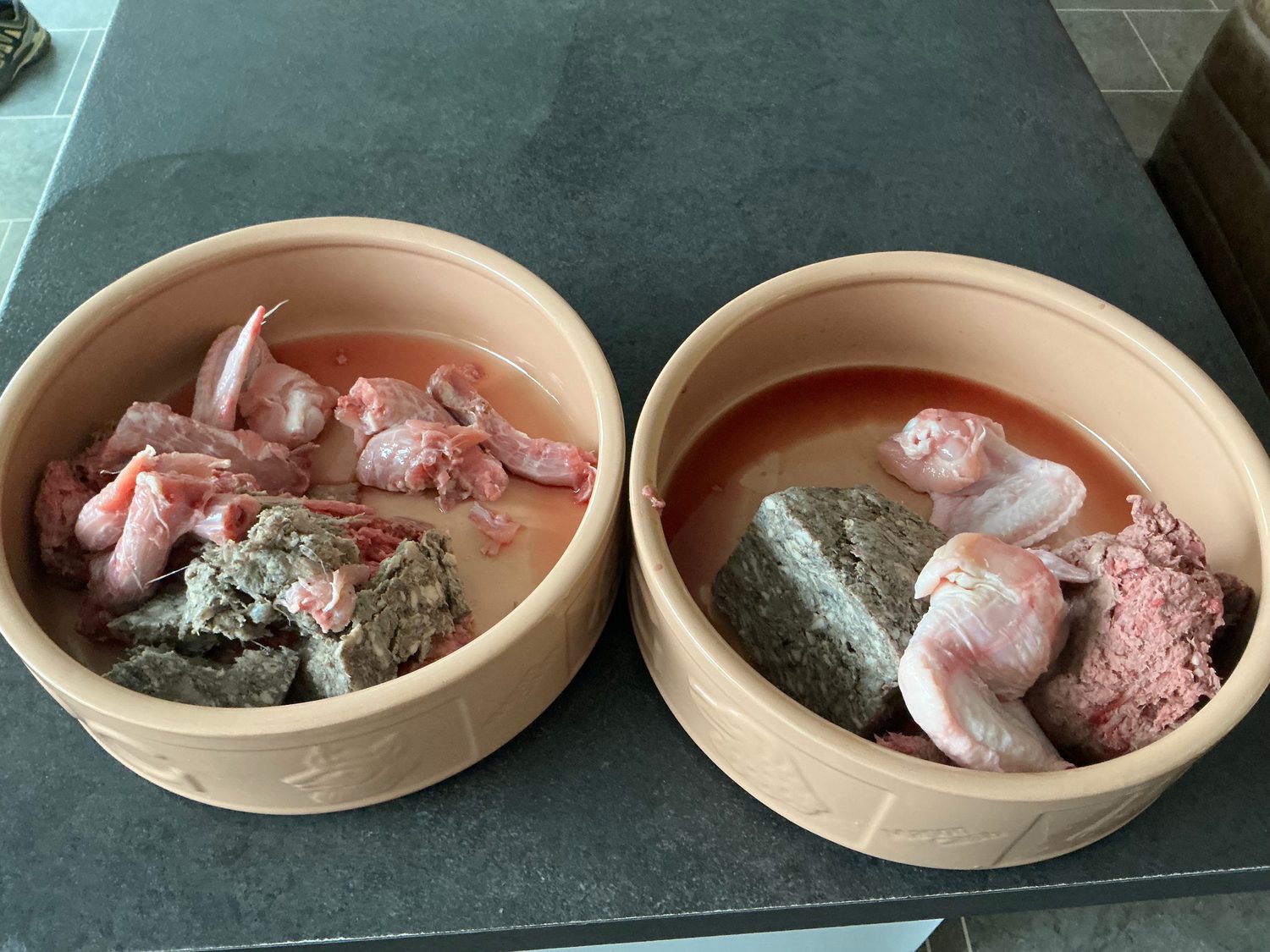
If you remember one thing about raw feeding, make it this: 80/10/5/5. It is the recipe for a balanced raw diet, and once it clicks, most of the worry about getting raw wrong disappears.
Here is what each number means and why it is there.
80% muscle meat
Muscle meat is the foundation of the diet. This is the chicken, beef, lamb, turkey and so on, the part most people picture when they think of meat. It provides protein for muscle, energy and overall condition.
A useful thing to know early: green tripe counts as muscle meat, and it is one of the best things you can feed. It is rich in natural enzymes and is gentle on the gut. Heart also counts as muscle meat, not organ, despite what you might assume, and it is an excellent, affordable choice.
The 80% is where most of the bowl comes from.
10% raw edible bone
Bone provides calcium and the minerals that balance the phosphorus in meat. It is also what gives raw-fed dogs their characteristically firm stools.
The word “edible” matters. This means soft, meaty bones the dog can actually eat and digest: chicken necks, wings, carcasses, and similar. It does not mean the big weight-bearing bones that are really chews rather than food.
Bone is the part to get right, because it is the easiest to get wrong. Too little and stools turn loose. Too much and they go white, chalky and hard, and your dog can become constipated. Ten percent is the target, and your dog’s stools will tell you quickly if you have drifted off it.
5% liver
Liver is not optional and it is not interchangeable with other organs. It is a genuine nutrient powerhouse, packed with vitamin A, copper, iron and B vitamins. Nothing else delivers what liver delivers, which is why it has its own slice of the formula.
Because it is so rich, a little goes a long way. Too much liver, too fast, is a classic cause of loose stools in dogs new to raw. Introduce it gradually and keep to roughly the 5%.
5% other secreting organ
This is the part people get confused about. “Other organ” does not mean any old offal. It specifically means other secreting organs, the ones that produce something: kidney, spleen, pancreas, testicle, and so on.
It does not mean heart (that is muscle meat) and it does not mean lung or tripe. Kidney is the most common and most available choice, and for many owners kidney plus liver covers the whole organ requirement nicely.
Like liver, secreting organ is rich, so introduce it slowly.
Why the ratio works
The genius of 80/10/5/5 is that it roughly recreates the proportions a dog would get from eating a whole prey animal. Muscle, bone and organ in something close to these amounts is what their body is calibrated for. Hit the ratio across the week and the nutrition broadly takes care of itself.
Notice “across the week”. You do not need every single meal to be perfectly 80/10/5/5. It is the weekly balance that counts. One day might be bonier, another might carry the organ. As long as it evens out over seven days, you are on track. This is what makes raw feeding far more flexible than it first appears.
Do I have to weigh everything?
At the start, weighing helps. It trains your eye and gives you confidence that you are in the right zone. After a few weeks most people can portion by sight and only weigh occasionally to check themselves.
If weighing every component every day sounds like a chore you will not keep up, that is exactly the problem a done-for-you plan solves. You get the quantities worked out, balanced across the week, and you simply feed them.
A quick reality check
Your dog’s body gives you constant feedback on whether the ratio is right:
- Firm but not crumbly stools mean your bone is about right.
- White, chalky, hard stools mean too much bone.
- Loose stools often mean too much fat or organ.
Learn to read this and you have a built-in correction system. We will cover it properly in a later post on what your dog’s stools are telling you.
Next in the series: how much raw food your dog actually needs.
This article is general guidance and not a substitute for professional veterinary advice. Always consult your vet before changing your dog’s diet, particularly if your dog is pregnant, unwell, or has a diagnosed health condition.
Put this into practice, for your dog
Get a free starter plan with exact portions and a shopping list built around your own dog.
Free, no obligation. We will never share your details.
Thank you, that's on its way.
We have got your dog's details and will email your free starter plan shortly. Keep an eye on your inbox (and your spam folder, just in case).