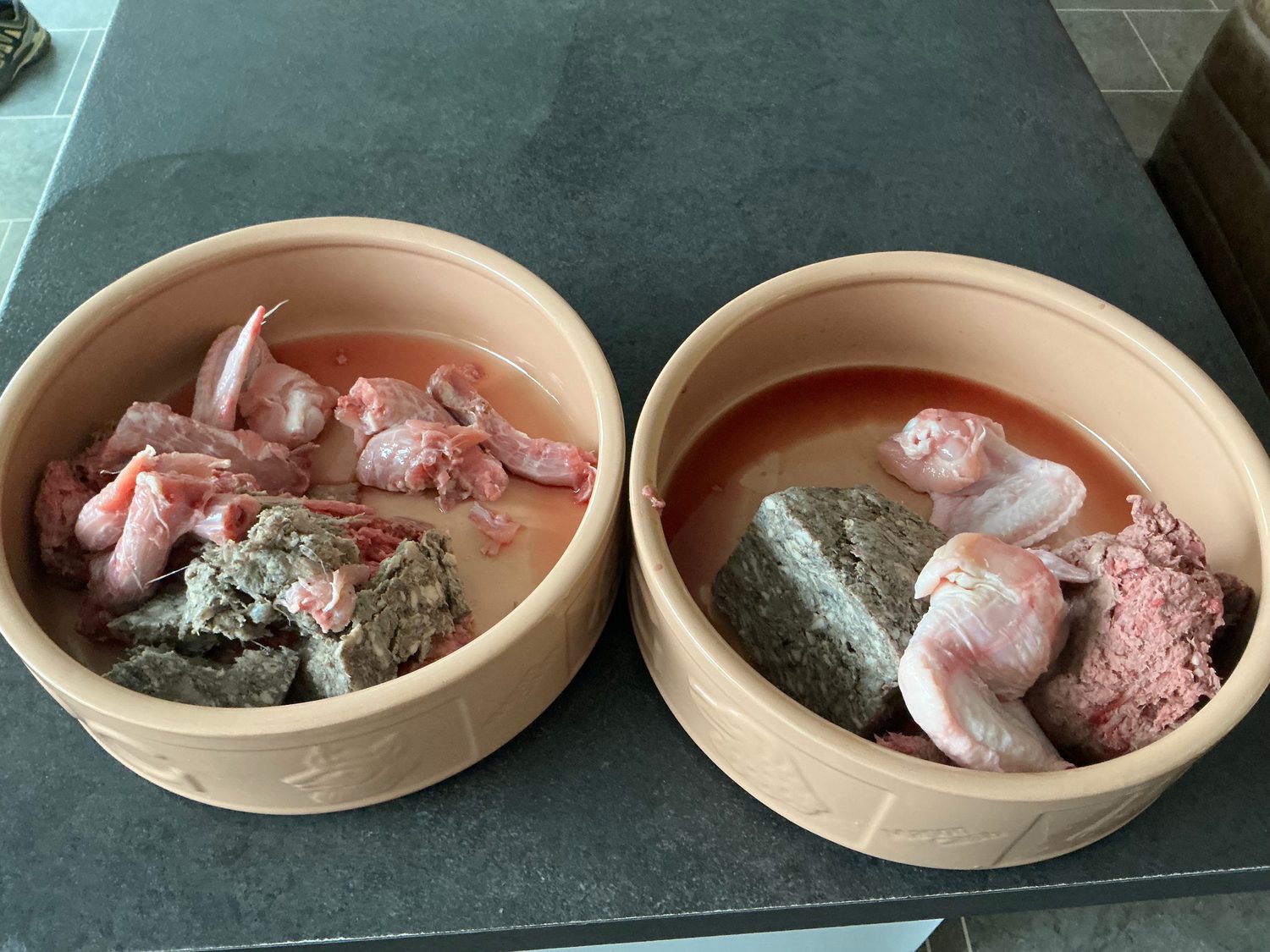
This is the question that stops most people. You like the idea of raw, but a quiet voice says, what if I make my dog ill, or worse. That worry is sensible and it deserves a straight answer rather than reassurance.
Fed correctly, raw is a well-established way to feed a dog. The risks are real but manageable, and they almost all come down to handling and balance. Let us take the four big fears one at a time.
Fear 1: “Raw meat carries bacteria”
It does. Raw meat can carry salmonella, E. coli and other bacteria. This is true whether you feed it to a dog or cook it for yourself.
Here is the part that reassures most people: a dog’s digestive system is far better equipped to deal with these bacteria than ours. Their stomach acid is more aggressive and their gut transit is fast, which gives harmful bacteria less chance to take hold. Dogs are not immune, but they are built for this in a way we are not.
The bigger consideration is kitchen hygiene, for your sake. Treat raw dog food exactly as you would treat the raw chicken you cook for dinner:
- Wash your hands, bowls and surfaces after handling it.
- Use a separate board or wash thoroughly between uses.
- Defrost in the fridge, not on the worktop.
- Do not leave raw food sitting out. Put down, eaten, lifted, cleaned.
Take normal precautions and the bacteria question becomes a non-issue for most households. If anyone in your home is pregnant, very young, elderly or immunocompromised, be extra careful with hygiene and speak to your vet and GP.
Fear 2: “Bones are dangerous”
Cooked bones are dangerous. They become brittle, splinter, and can cause real harm. Never feed cooked bones of any kind.
Raw bones are a different thing entirely. Raw edible bone, the soft, meaty kind like chicken necks, wings and carcasses, is pliable and digestible, and it is an essential part of a balanced raw diet. It provides calcium and keeps stools firm.
The rules that keep it safe:
- Raw only, never cooked.
- The right size for your dog. A bone should be large enough that they have to chew it, not gulp it.
- Supervise, especially at first and especially with fast eaters.
- Match the bone to the dog. A small dog and a large dog need different things.
Weight-bearing bones from large animals, like beef marrow bones, are best avoided or used with caution, as they are hard enough to crack teeth.
Fear 3: “I will get the balance wrong”
This is the most legitimate fear of the four, and the one this whole site is built to solve.
A raw diet is not just meat. A dog needs the right proportions of muscle meat, bone, liver and other organ. Feed only muscle meat for weeks and you create real deficiencies. Feed too much bone and you cause constipation. Too much organ and you get loose stools.
The good news is that balance is a solved problem. The widely used framework is 80/10/5/5, which we explain in detail in the next post. Once you know the ratios, or once you follow a plan that hits them for you, balance stops being something you worry about and becomes something that just happens.
Fear 4: “My dog will choke”
Choking risk is real but low, and it is mostly about eating style rather than raw food itself. Gulpers and fast eaters are the ones to watch.
Reduce the risk by feeding appropriately sized pieces, supervising meals, and slowing fast eaters down. Some owners feed larger chunks precisely because they make the dog chew rather than swallow whole. If your dog bolts food, this is worth getting right before you introduce bigger bony items.
The honest bottom line
Raw feeding is safe when you do three things: handle it hygienically, feed raw bone never cooked, and keep the diet balanced. None of these is difficult once you know what you are doing.
The owners who run into trouble are almost always the ones who jumped in without a plan. The owners who thrive are the ones who took it step by step. You are doing the second thing right now.
Next in the series: the 80/10/5/5 ratio, explained simply.
This article is general guidance and not a substitute for professional veterinary advice. Always consult your vet before changing your dog’s diet, particularly if your dog is pregnant, unwell, or has a diagnosed health condition.
Put this into practice, for your dog
Get a free starter plan with exact portions and a shopping list built around your own dog.
Free, no obligation. We will never share your details.
Thank you, that's on its way.
We have got your dog's details and will email your free starter plan shortly. Keep an eye on your inbox (and your spam folder, just in case).